

Conservation · Rhino
Conservation in action
Real conservation depends on active, science-based stewardship and steady reinvestment on the ground.
“Conservation through sustainable use.”
The approach
Conservation, not spectacle
Wildlife on managed land needs people who know the animals, watch the herd closely and put money back into the land that carries it. That is the thinking behind everything Bateleur does.
The rhino conservation opportunity follows the same fair-chase values as every Bateleur hunt. That means respect for the animal, honesty in the field and a professional hunter at your side throughout. For Bateleur, conservation in the Northern Cape is measured by healthy animals and protected habitat, not by trophies alone.
Why active stewardship
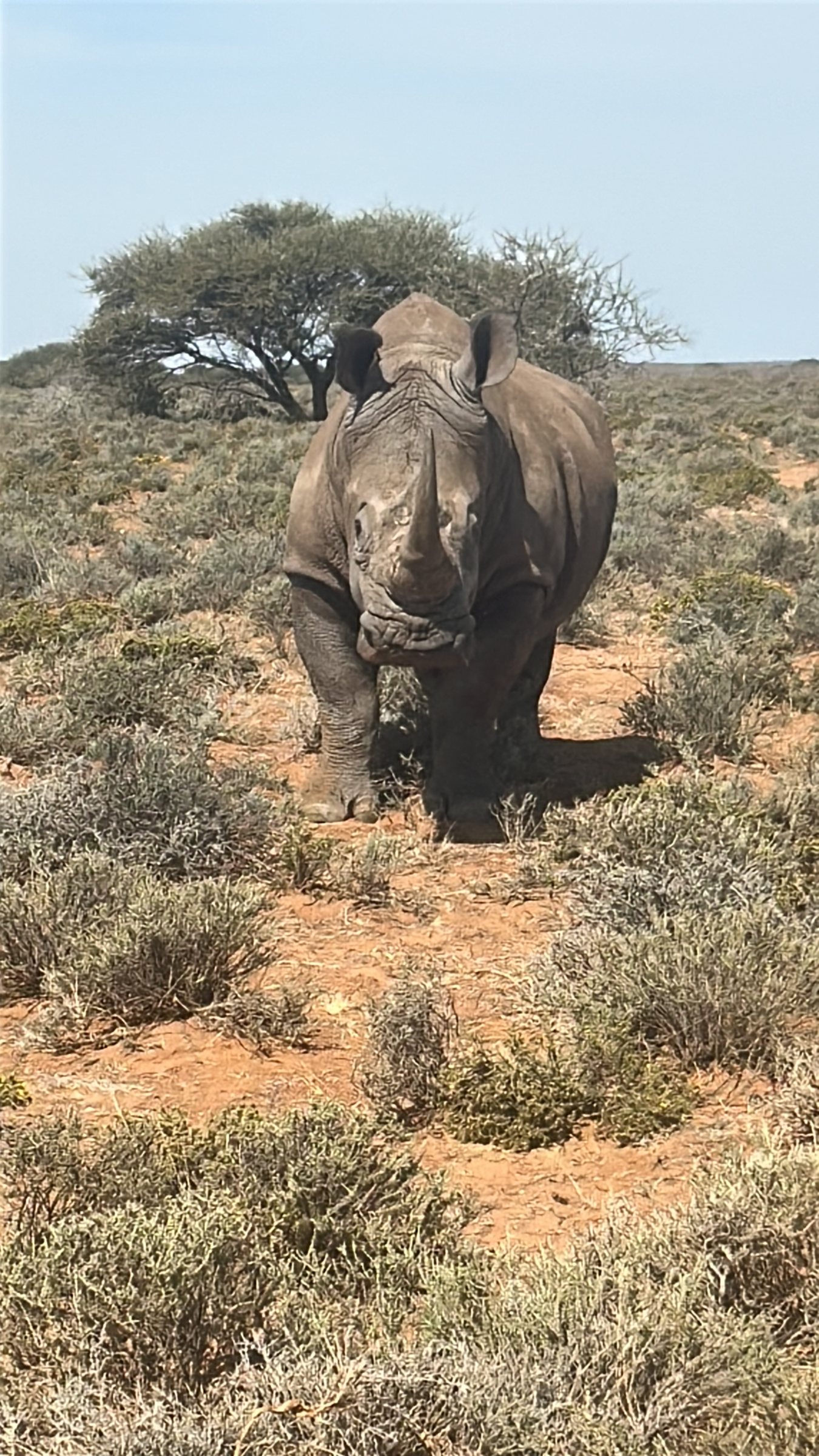
A herd in balance
Within managed ecosystems, a healthy rhino population is never left to chance. Selective, carefully planned management keeps territorial bull dynamics in balance, protects breeding cows and holds numbers within what the land can sustainably carry. This hands-on approach to white rhino conservation in South Africa supports strong genetics, natural breeding and a secure future for the herd.
How it works
Regulated, and reinvested
Sustainable-use conservation only works when it is lawful, transparent and accountable. Every part of the rhino conservation process at Bateleur is managed with that same care.
- Strictly regulated
- Every rhino hunt is conducted under official environmental regulations and formal permits, alongside Bateleur’s senior field team. Full compliance is non-negotiable and is confirmed before any hunt is arranged.
- Where the support goes
- Taking part in an official management allocation funds dedicated protection, veterinary support and habitat preservation. Your participation contributes directly to the safety and wellbeing of rhino in the Northern Cape.
- Shared in confidence
- Ecological credentials, documentation and itinerary details are shared on confidential enquiry, never published. This discretion protects the animals, the land and the people who care for them.

The wider picture
- 352Rhinos poached in South Africa in 2025
- 420Rhinos poached in 2024
- 16%Fewer than the year before
Source: national figures announced by the Minister of Forestry, Fisheries and the Environment, as reported by The Citizen.
Principles
The values behind it
Fair chase
Every hunt is fair chase, on foot, with your professional hunter setting the pace.
Respect for wildlife
Conducted with respect for the animal and the land, never rushed for a quick result.
Permit-led
Every rhino hunt runs under official environmental regulations and formal permits.
Reinvested in the land
Proceeds fund dedicated protection, veterinary support and habitat preservation.
Enquire in confidence
Rhino questions
Ecological credentials, documentation and itinerary details are shared on confidential enquiry. Speak to Mattie on WhatsApp or by email.
Who can enquire?
Enquiries are welcome from hunters and conservation partners. Mattie replies personally to every enquiry.
Is the hunt permitted?
Yes. Every rhino hunt is conducted strictly under official environmental regulations and formal permits.
Where does the money go?
Taking part in an official management allocation funds dedicated protection, veterinary support and habitat preservation.
Why are locations, numbers and dates not published?
To protect the animals and the people who look after them, Bateleur does not publish locations, numbers, dates or security arrangements. These details are shared in confidence with serious enquirers.